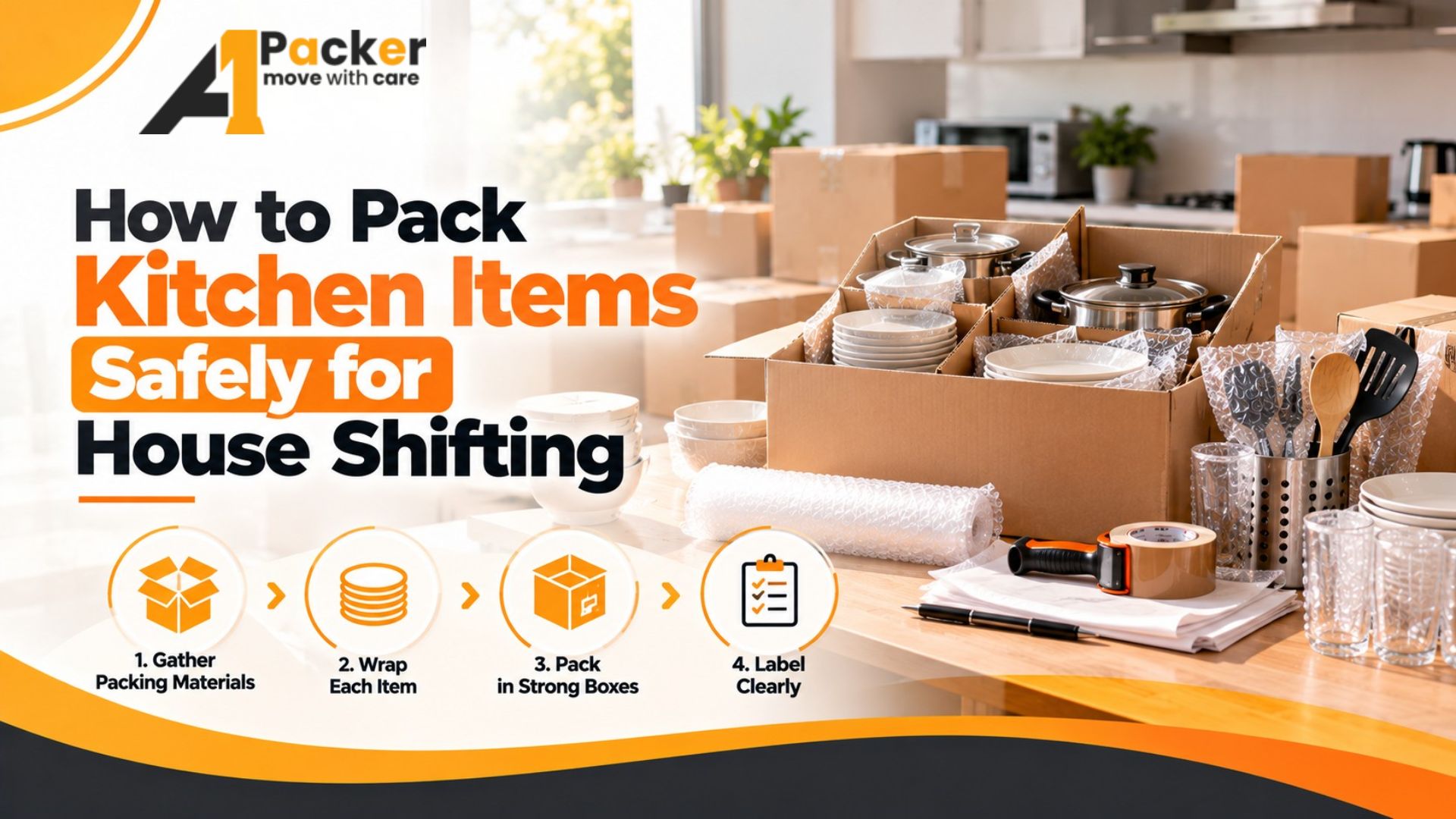
Why the Kitchen Is the Hardest Room to Pack
Every room in your home presents packing challenges, but the kitchen is the most unforgiving. It holds your most fragile items — glassware, china, ceramic crockery — alongside your heaviest — cast iron cookware, countertop appliances, large pots. Pack it carelessly and you will spend your first morning in the new home picking up pieces of broken plates from the bottom of a box.
This guide covers every category of kitchen item and the right way to pack each one so your entire kitchen arrives in the same condition it left.
The Golden Rule: Dedicate More Time to Packing Than You Expect
Most people underestimate how long it takes to pack a kitchen properly. A medium-sized kitchen with a full set of crockery, glassware, appliances, and pantry items typically takes three to five hours to pack correctly. Start at least two days before moving day, not the morning of.
What You Will Need
Gather these packing materials before you start:
- Double-walled corrugated cardboard boxes in small and medium sizes — heavy kitchen items in small boxes, lighter items in larger ones
- Bubble wrap rolls — minimum 5 metres for a full kitchen
- Packing paper or old newspapers
- Foam padding or kitchen towels for internal cushioning
- Packing tape — use quality tape, not cheap alternatives that pop open under weight
- Permanent marker for labelling
Packing Glassware
Glassware is the most vulnerable category in your kitchen. Each piece needs its own individual wrap.
- Wrap each glass individually in two layers of bubble wrap. Start at the base and roll diagonally upward, tucking the bubble wrap into the opening of the glass
- Fill the glass's interior with crumpled packing paper before wrapping — this prevents the walls from flexing under pressure
- Place glasses upright in the box, never on their sides
- Pack heavier tumblers at the bottom, delicate wine glasses at the top
- Fill every gap in the box with crumpled paper — there should be zero movement when you shake the closed box
- Write "FRAGILE — GLASSES — THIS SIDE UP" clearly on all four sides and the top
Packing Plates, Bowls, and Crockery
The most common mistake when packing plates is stacking them flat. This is wrong. Plates packed on their sides — like records in a crate — survive transport far better because the force of impact is distributed across the edge rather than the flat surface.
- Wrap each plate individually in one layer of packing paper and one layer of bubble wrap
- Stand plates on their edge inside the box, not flat
- Group plates of similar size together
- Pack heavier plates at the bottom, lighter ones on top
- Line the bottom of the box with at least 5 cm of crumpled paper before packing any plates
- Bowls can be nested inside each other with a layer of packing paper between each one
Packing Pots, Pans, and Cookware
Cookware is durable but can damage other items if it shifts during transit.
- Nest pots inside each other with a layer of packing paper or a folded kitchen towel between each one to prevent scratching
- Pack lids separately — wrap them in bubble wrap and place them on top of the pots, not stacked loosely on top of each other
- Cast iron cookware is extremely heavy — pack it in small boxes only, never in large boxes. A single box of cast iron can weigh more than 15 kg
- Non-stick pans should have paper between them to prevent surface scratches
Packing Kitchen Appliances
Microwave and Oven
If you have the original boxes, use them. If not, wrap the appliance in several layers of bubble wrap and pack it in a snug-fitting box with foam or crumpled paper padding on all six sides. Remove the glass turntable from the microwave and pack it separately as a fragile item.
Mixer Grinder and Food Processor
Remove the jars and blades from the base unit. Wrap blades in thick paper and tape securely — never leave blades loose in a box. Pack the motor unit and jars separately, each wrapped in bubble wrap.
Coffee Maker and Electric Kettle
Remove all water before packing. Wrap in bubble wrap and pack with the power cord coiled and taped to the unit. Place upright in a padded box.
Refrigerator
Your packers and movers will handle the refrigerator as a special item, but you need to prepare it: defrost it completely at least 24 hours before moving day, remove all food, and dry the interior thoroughly. Tape the shelves in place or remove them and pack them as fragile glass items.
Packing Pantry Items
Dry goods like rice, flour, and lentils are fine to transport in sealed bags or containers. Liquid items like oils, sauces, and pickles deserve extra attention:
- Check that all lids are tight — consider wrapping them with plastic wrap before screwing the lid on
- Place each liquid container in a zip-lock bag before packing in a box
- Pack liquids upright and clearly label the box "LIQUIDS — KEEP UPRIGHT"
Label Every Box with Weight and Contents
Kitchen boxes tend to be heavy. Label each box with the approximate weight, contents category, and fragility level so movers know how to handle them. A box that says "PLATES — FRAGILE — 12 KG" will be treated very differently from an unlabelled box of the same weight.
The First Box to Unpack
Pack a separate small box — the "day one essentials" kit — with one set of cups or glasses, a kettle, coffee or tea, and basic utensils. This box goes last on the truck and comes off first. You will thank yourself when you can make a cup of tea within twenty minutes of arriving at your new home.