Not All Car Moving Is the Same
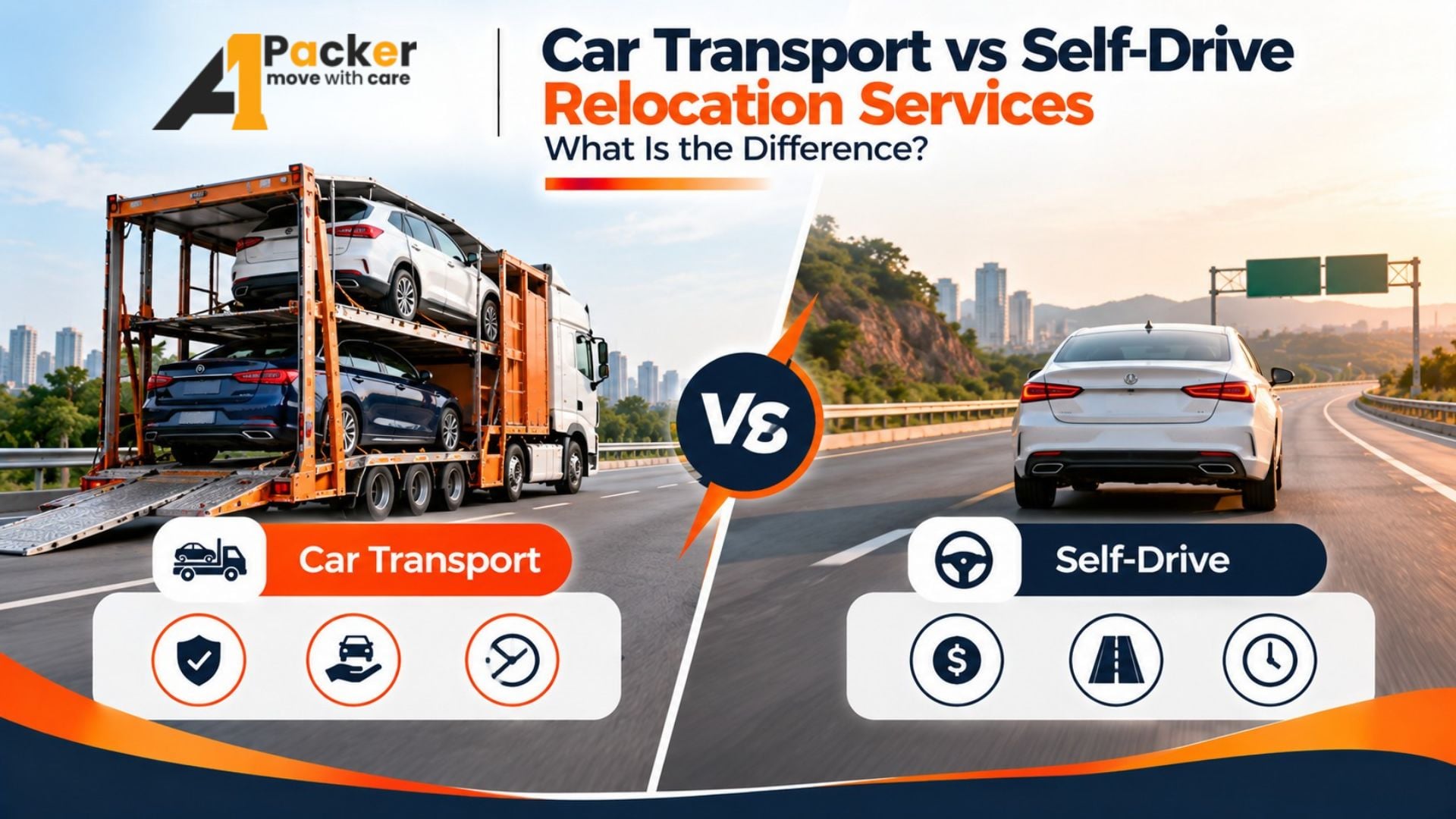
When people talk about "car transport," they usually mean one thing: loading the car onto a carrier truck and having it delivered to a new city while the owner travels separately. But there is a second, distinct service that falls under the same general category: self-drive relocation services, where a professional driver picks up your car and drives it to the destination on public roads.
These two services are fundamentally different in how the car moves, what the risks are, what documentation is needed, and what they cost. Understanding both options fully lets you choose the one that is right for your specific situation.
Car Transport on a Carrier: What You Already Know
This is the standard car transport service described throughout this blog: your vehicle is loaded onto a multi-car or single-car carrier truck, secured, and transported without being driven. The car's odometer does not change during the journey (except for a few metres of movement at loading and unloading). The car is not exposed to road conditions — rain, dust, road debris — except indirectly if it travels on an open carrier.
Best for: anyone who wants zero additional mileage on the car, the cleanest possible arrival condition, and the peace of mind that the car has not been driven by someone they do not know.
Self-Drive Relocation Services: How They Work
Self-drive relocation — sometimes called a driver relocation service or drive-away service — involves a professional driver collecting your vehicle from your origin address and driving it to your destination on public roads, just as you would drive it yourself. The service is used by people relocating long distances who either do not want to make the drive themselves or who need to travel by air or train while the car follows by road.
The driver is typically employed by a relocation company that specialises in this service. They carry their own driving licence, the vehicle's RC and insurance documents, and any permits required for the route. The car arrives at the destination having been driven the full distance — with the corresponding odometer increase, fuel consumption, and road exposure that implies.
Key Differences Side by Side
Mileage Added to the Vehicle
Carrier transport: zero additional mileage, except a few metres at loading and unloading.
Self-drive relocation: the full road distance is added to the odometer. A Delhi to Bangalore relocation adds approximately 2,100 km to the car's mileage. For a relatively new or low-mileage vehicle, this is a meaningful increase. For an older vehicle with high existing mileage, it is negligible in proportion.
Wear and Road Exposure
Carrier transport: no road wear — tyres, brakes, and engine are not used during transport. The car is exposed to weather only if on an open carrier.
Self-drive relocation: full road wear for the distance driven. Highway driving is lower-wear than city driving, but a 2,000 km journey still adds measurable wear to tyres and engine. The car is exposed to all road conditions on the route.
Fuel Cost
Carrier transport: no fuel cost to you — the carrier runs on its own fuel.
Self-drive relocation: you pay for the fuel consumed during the drive. For a 2,000 km journey, this is a significant cost — typically 15,000 to 20,000 rupees in petrol — that is either included in the service fee or billed separately as actuals.
Transit Time
Carrier transport: typically three to six days for a long-distance route, depending on the carrier's schedule and route.
Self-drive relocation: often faster because the driver takes the most direct route without making carrier-specific stops. A 2,000 km drive at 500 km per day takes four days, potentially faster than a carrier that makes multiple stops.
Cost
Pricing varies by company and route, but as a general comparison for a long-distance move (Delhi to Bangalore):
- Carrier transport: 12,000 to 20,000 rupees depending on carrier type (open vs enclosed)
- Self-drive relocation: 8,000 to 15,000 rupees for the driver's fee, plus fuel at actuals (15,000 to 20,000 rupees). Total with fuel: 23,000 to 35,000 rupees — typically more expensive than carrier transport when fuel is included.
Insurance and Documentation
Carrier transport: your motor insurance is irrelevant during transport (it covers road use); transit insurance covers the vehicle on the carrier.
Self-drive relocation: your own motor insurance must be valid and current for the vehicle to be driven on public roads. The relocation driver is an authorised user of your vehicle, similar to a commercial driver. Confirm with your insurer that a third-party driver of this kind is covered under your specific policy.
Which Should You Choose?
- Choose carrier transport if your car is relatively new, you want zero added mileage, or the vehicle is high-value and you prefer it not to be driven by anyone other than yourself.
- Choose self-drive relocation if your vehicle is older with existing high mileage, cost is the primary consideration (excluding fuel, the driver fee may be lower), or you need the car to arrive faster than a carrier schedule allows.
For most standard relocations involving a car under five years old, carrier transport is the cleaner and often more cost-effective choice when fuel is factored into the self-drive calculation.