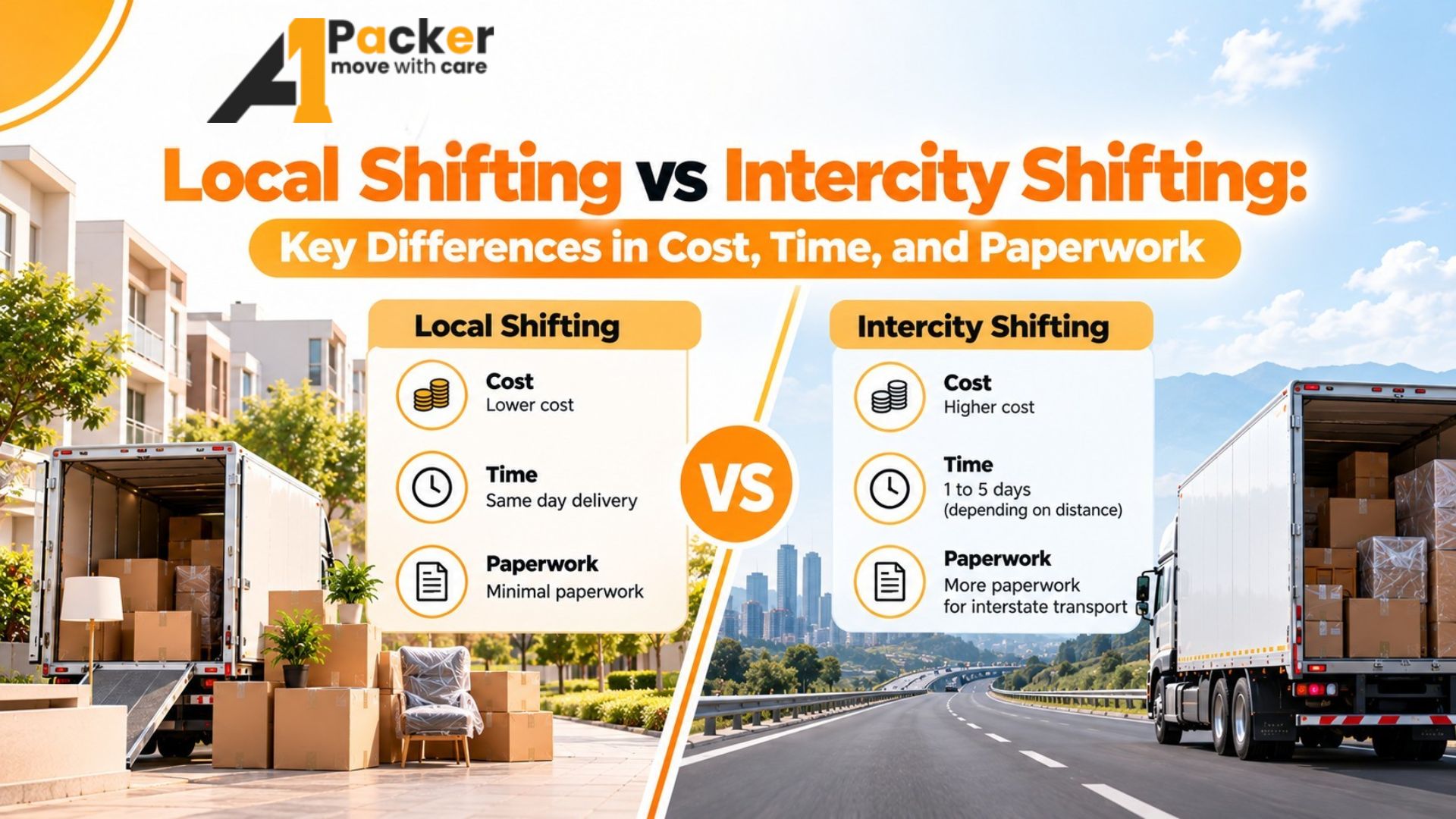
Two Very Different Operations Under the Same Name
When you search for "packers and movers," the results look similar whether you are moving three kilometres across town or three hundred kilometres to a different state. But the operations behind these two types of shifting are fundamentally different — in cost structure, timing, logistics, and documentation. Understanding these differences helps you plan better, compare quotes accurately, and avoid surprises.
What Is Local Shifting?
Local shifting — sometimes called intra-city or within-city shifting — covers any move where the origin and destination are in the same city or town, typically within a radius of 50 km. Moving from Sector 45 to Sector 82 in Gurgaon is a local move. Moving from one neighbourhood of Mumbai to another is a local move.
Local shifts are usually completed in a single day. The truck is loaded in the morning, drives across the city, and is unloaded by evening.
What Is Intercity Shifting?
Intercity shifting — also called outstation or long-distance shifting — covers moves between different cities or different states: Gurgaon to Pune, Delhi to Bangalore, Hyderabad to Chennai. These moves cover hundreds or thousands of kilometres, may cross multiple state borders, and typically take two to five days depending on the distance.
How Pricing Differs
Local Shifting Pricing
Local shifts are typically priced in one of three ways:
- Flat rate by home size — a fixed price for a 1 BHK, 2 BHK, or 3 BHK move within the city
- Hourly rate — a charge per hour from the time the team arrives at your door until the job is complete
- Per-kilometre plus labour — a base labour charge plus a per-kilometre rate for the distance driven
For a standard 2 BHK local move, costs typically range from five thousand to fifteen thousand rupees depending on the city, the distance, the floor levels involved, and whether packing material is included.
Intercity Shifting Pricing
Intercity moves are priced using a more complex model that combines several factors:
- Distance of the route — the primary driver of cost, reflecting fuel, driver wages, tolls, and overnight stops
- Volume or weight of goods — the amount of space your goods occupy in the truck
- Packing materials — intercity moves require more robust packing because goods are in transit for longer and subject to highway vibrations
- Origin and destination floor charges — same as local moves
- Transit insurance — strongly recommended for intercity moves and often quoted separately
For a typical 2 BHK intercity move from Delhi to Bangalore — roughly 2,100 km — expect costs in the range of twenty-five thousand to fifty thousand rupees depending on the volume of goods and the level of service.
How Time Differs
Local Shifting
A local move typically takes four to eight hours for a 1 or 2 BHK flat, and up to twelve hours for a large 3 BHK or furnished villa. You and your family can generally sleep in the new home the same night.
Intercity Shifting
Transit time depends on the distance. General estimates for popular routes:
- Delhi to Lucknow (500 km): 1 to 2 days
- Delhi to Mumbai (1,400 km): 3 to 4 days
- Delhi to Bangalore (2,100 km): 4 to 5 days
- Delhi to Chennai (2,200 km): 4 to 6 days
During peak seasons or holidays, transit times can increase. Always confirm the estimated delivery window in your booking agreement.
How Documentation and Paperwork Differ
Local Shifting
Local moves require minimal paperwork. You will typically sign a booking form that lists the items being moved, the quoted price, and the liability terms. No permits or government approvals are needed for intra-city moves.
Intercity Shifting
Moving goods across state borders requires more documentation:
- Bilty or Goods Receipt — a transport document that the moving company provides, listing all goods being transported. This is checked at state border checkpoints (octroi nakas or toll booths in some states).
- E-Way Bill — for commercial goods above fifty thousand rupees in value, the transporter may need an e-way bill under GST rules. For household goods moved by individuals, this is typically handled by the moving company.
- Vehicle RC and permits — the truck needs the appropriate transport permits to operate across state lines. A reputable moving company will have these in order; always confirm before booking.
For personal vehicles being transported along with household goods, the vehicle's RC and insurance documents also need to accompany the shipment.
Choosing the Right Company for Each Type
For local moves, many smaller regional companies do an excellent job. For intercity moves, choose a company with a physical presence in both the origin and destination cities, a clear escalation process for damage claims, and positive track records for long-distance deliveries.
Regardless of the type, always get a written contract before the move starts. This is your only protection if something goes wrong.