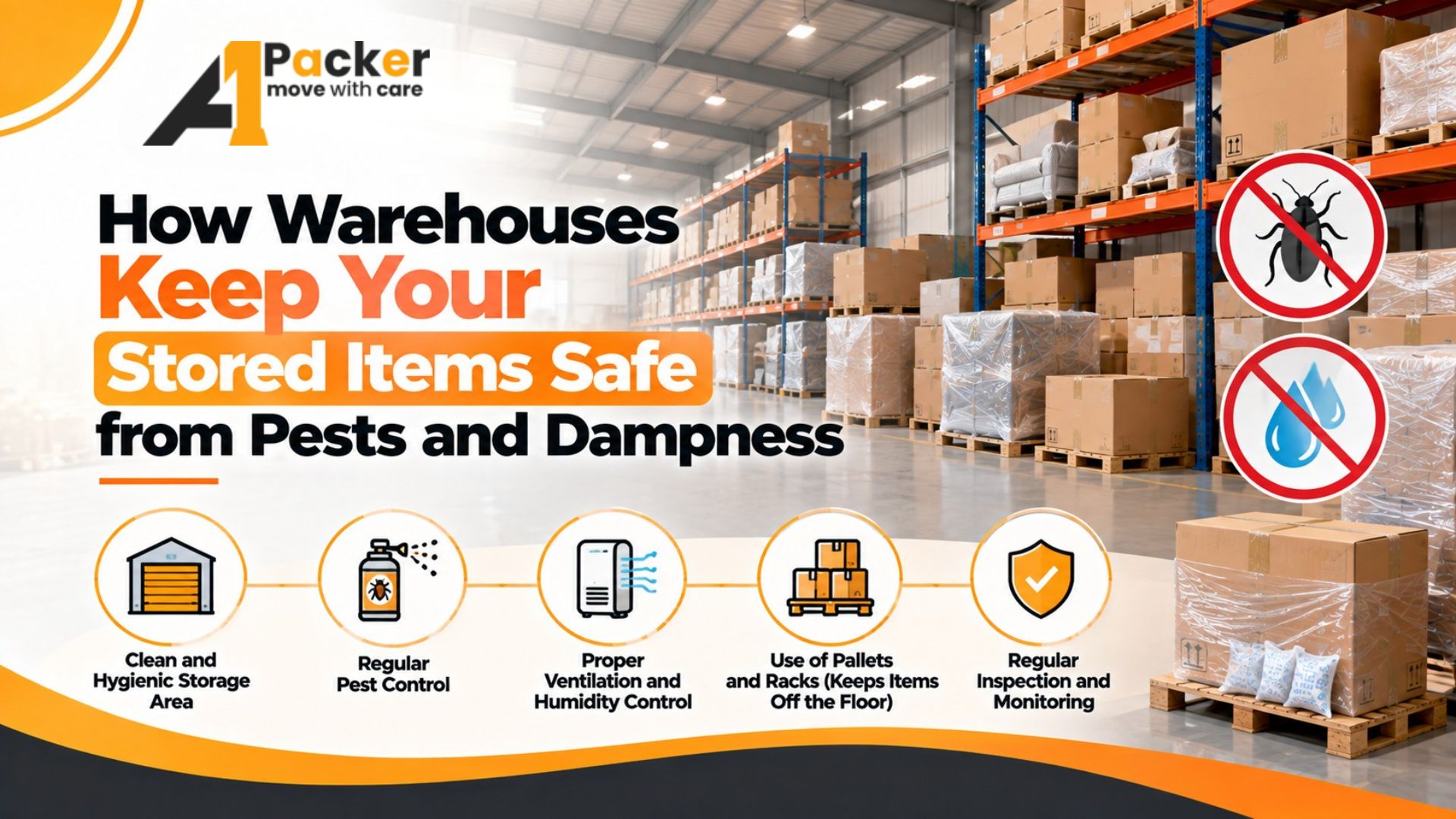
The Two Silent Threats in Any Storage Facility
When people worry about stored goods, they usually think about theft. In practice, the two most common causes of damage in storage facilities are far less dramatic: pests and moisture. A rat can destroy a wooden cabinet in weeks. Unchecked humidity over a few months can warp furniture, corrode metal, grow mould on fabric, and permanently damage electronics.
Professional warehouses that serve households and businesses address both threats systematically. Understanding how they do it will help you evaluate any facility you are considering and ask the right questions before you sign a storage agreement.
Pest Control in a Professional Storage Facility
A well-run warehouse treats pest control as an ongoing programme, not a one-time event. Here is what this typically involves:
Physical Barriers
The first line of defence is the building itself. Professional facilities seal all entry points — gaps in walls, spaces around pipes and conduits, loading dock gaps — that could allow rodents or insects to enter. Metal mesh or concrete sealant is used around utility entries. Loading docks, which are the most common entry point for pests, have brush seals and dock levellers that close flush when not in use.
Scheduled Chemical Treatment
A licensed pest control company visits regularly — typically monthly — to apply treatments in wall perimeters, entry points, and any identified activity areas. These treatments rotate periodically so pests do not develop resistance to a single chemical. The schedule and treatment logs should be available for inspection by customers who ask to see them.
Rodent Bait Stations
Bait stations are placed at regular intervals around the warehouse perimeter — inside and outside. These are tamper-proof units that contain rodenticide bait. They are checked and refilled on a schedule and serve as both a deterrent and an early detection system: a station that has been visited signals activity in that zone before it becomes an infestation.
Stored Goods Practices
How goods are stored matters as much as the chemical programme. Items stored directly on a concrete floor create ideal habitats for pests — the gap between a box bottom and the floor is exactly the kind of sheltered, undisturbed space rodents seek. Reputable facilities store all goods on raised pallets, typically 10 to 15 cm above the floor, eliminating that harborage space and making regular inspections of the floor beneath items easy.
Humidity and Moisture Control
Moisture damage in storage happens slowly and invisibly until the harm is already done. A wooden dining table that goes in looking perfect can emerge warped and cracked after six months in a humid, uncontrolled environment. Here is how professional facilities prevent this.
Dehumidifiers and Climate Monitoring
Better storage facilities run industrial dehumidifiers continuously to maintain relative humidity between 45 and 60 percent. Below 45 percent, some materials — particularly older wood and certain leathers — can dry out and crack. Above 60 percent, mould growth becomes a real risk on fabric, leather, paper, and cardboard packing materials.
Digital humidity sensors placed throughout the facility monitor conditions in real time. If humidity spikes — due to a rainy season, a roof leak, or equipment failure — the facility management is alerted and can respond before damage occurs.
Ventilation
Stagnant air encourages both mould and condensation. Well-designed warehouses have passive ventilation through high-level vents and, in some cases, active air circulation through ceiling fans or ducted systems. This keeps air moving across stored goods, preventing the localised moisture pockets that lead to mould on fabric surfaces or corrosion on metal items.
Pallet Storage and Air Gap
The same pallet storage that protects against pests also protects against moisture. Concrete floors absorb ground moisture and can transfer it to items sitting directly on the surface. Raising goods on wooden or plastic pallets creates an air gap that prevents this transfer. In facilities in high-humidity regions, pallets are sometimes elevated further on racking systems to improve air circulation around all sides of stored items.
What This Means for Specific Items You Store
Wooden Furniture
Solid wood is the most sensitive item in any household storage. It expands and contracts with humidity changes, and sustained high humidity causes permanent warping. Confirm that the facility you choose actively manages humidity before storing wooden furniture for more than a month.
Electronics
Electronics are sensitive to both humidity and temperature extremes. A climate-controlled bay or room within a larger facility is the right choice for televisions, audio equipment, and computers going into storage for extended periods.
Fabrics, Mattresses, and Upholstery
These are the most vulnerable to mould and pest damage. Always store them in breathable covers — not sealed plastic, which traps moisture against the fabric surface. Ask the facility whether they use breathable furniture covers or whether you need to provide them.
Questions to Ask Before Booking Storage
When you visit or call a storage facility, ask directly:
- What is your pest control schedule and who is your service provider?
- Do you actively monitor and control humidity? What range do you maintain?
- Are all goods stored on raised pallets?
- Has the facility had any pest or water damage incidents in the past year?
- Is my stored goods insured against pest and water damage?
A facility that cannot answer these questions clearly is one that probably has not thought through these issues systematically. That is the information you need before you trust it with your belongings.