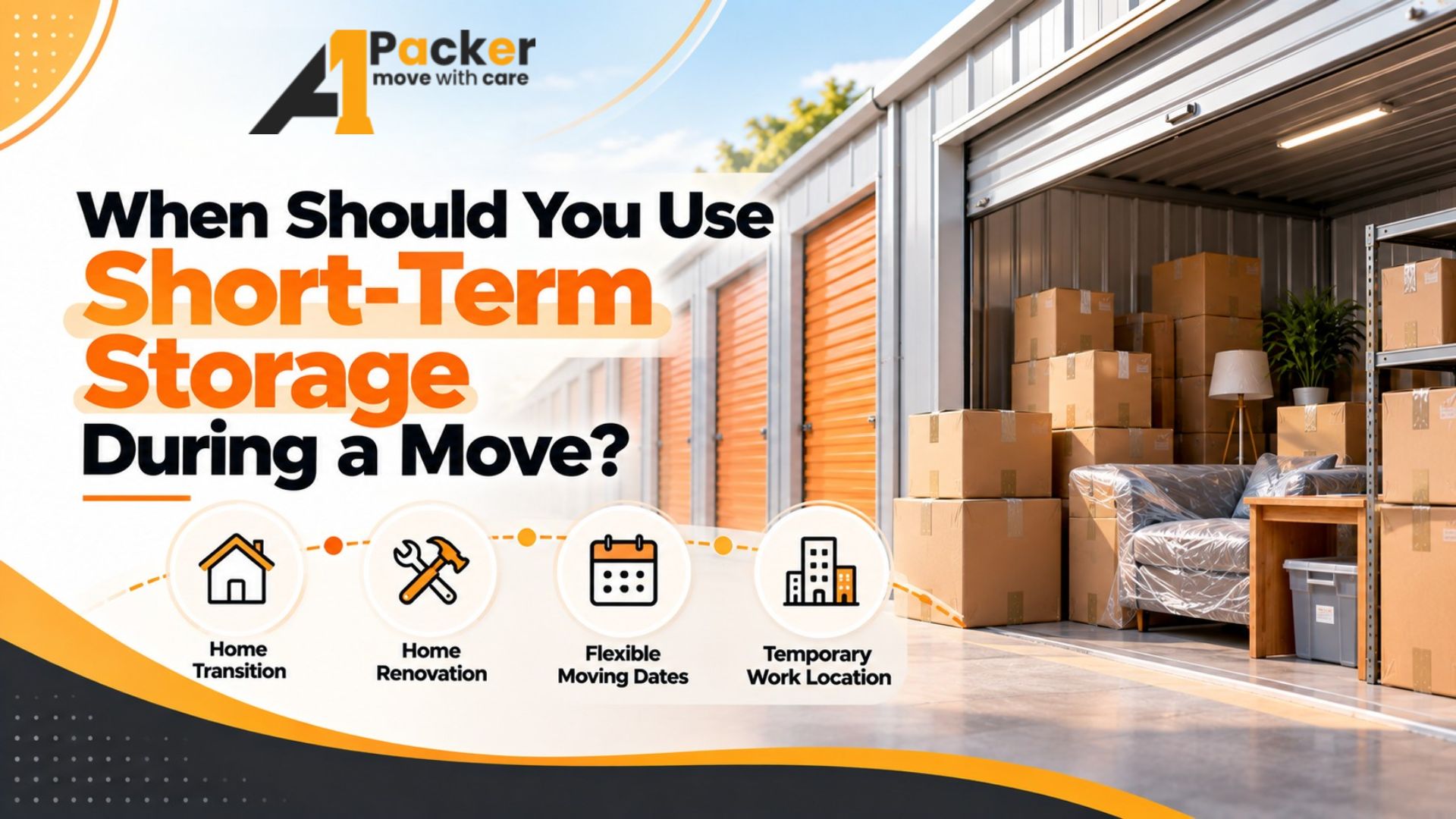
The Gap Nobody Plans For
In a perfect relocation, you vacate your old home on the last day of the month and move into your new one the very next morning. In reality, this almost never happens. Lease end dates, possession delays, renovation schedules, and travel plans rarely align neatly. The result is a gap — sometimes days, sometimes weeks — during which your belongings have nowhere to go.
Short-term storage is the solution most people overlook until they are standing in their empty flat with a truck full of furniture and nowhere to send it. This guide explains exactly when it makes sense and how to plan for it.
Scenario 1: Gap Between Move-Out and Move-In Dates
This is the most common reason people use short-term storage. Your lease on the old flat ends on the 31st. Your new home's possession date is the 10th of the following month. That is a ten-day gap in which all your belongings need to live somewhere.
Your options in this situation are:
- Stay in a hotel or with family — this handles your personal accommodation but not your furniture
- Ask the new owner for early access — not always possible
- Use short-term storage — your goods are packed, transported to a secure facility, stored safely, and then delivered to your new address on possession day
Short-term storage for a gap of one to three weeks is often cheaper than you expect. Many packers and movers offer combined shifting-and-storage packages that include pickup from the old address, secure storage, and final delivery to the new home — all in one booking.
Scenario 2: Renovation Delays at the New Home
You received possession of your new flat, but the painting is not done, the flooring is being laid, or the kitchen is mid-renovation. Moving your furniture and household goods into an active construction zone risks damage to your belongings and interrupts the work being done.
In this case, short-term storage gives workers the space to do their job while your goods are kept safely off-site. Once the renovation is complete and the flat is clean and dry, everything can be delivered in one coordinated move.
Scenario 3: Staged or Phased Moving
Some relocations happen in phases — you move to a new city for work and initially live in a furnished apartment or a paying guest accommodation. You plan to move into a permanent home in three to four months.
Shipping all your furniture to a temporary address and then shipping it again is both expensive and risky — every move is an opportunity for damage. A better approach is to put your household goods into storage near your destination city and retrieve them when your permanent home is ready.
Scenario 4: Downsizing to a Smaller Home
Moving from a three-bedroom house to a two-bedroom flat means some furniture simply will not fit. But you may not be ready to sell or donate those items immediately — a particular sofa, an heirloom dining table, or an extra wardrobe that you expect to need later.
Short-term storage — which can easily extend to medium-term if needed — holds these items while you settle in and decide what to do with them. Many families keep certain items in storage for one to three months after a downsize before making a final decision about selling or donating.
Scenario 5: Post-Sale Waiting Period
If you have sold your home and the buyer needs possession before your new home is ready, you face a forced gap. Short-term storage combined with temporary rental accommodation is the cleanest solution. Your goods are secure, your buyer gets timely possession, and you are not pressured to rush into a permanent home before you are ready.
What to Look for in a Short-Term Storage Facility
Not all storage facilities are equal. When evaluating your options, ask about:
- Security — CCTV coverage, guarded access, and individual bay locks
- Pest and moisture control — a good facility actively prevents rodent access and controls humidity to protect wooden furniture and electronics
- Insurance — confirm that your goods are covered against fire, theft, and water damage while in storage
- Flexibility — can you access your goods during the storage period? Can you extend without penalty if your move-in date shifts?
- Combined service — using the same company for shifting and storage is almost always more efficient and cheaper than booking two separate providers
How to Estimate Your Storage Costs
Storage is typically priced by volume (cubic feet or square feet of floor space) and duration. A standard 2 BHK household generates 400 to 600 cubic feet of goods. Short-term storage for this volume for two to four weeks is generally affordable — often less than a single month's rent on a small flat.
Ask for an all-inclusive quote that covers packing, transport to the facility, storage, and final delivery. Many companies charge separately for each leg of this journey; bundling them saves both money and coordination effort.
Plan for the Gap, Not Around It
The worst time to arrange short-term storage is on moving day when you realise there is nowhere to deliver your goods. Build the gap assessment into your move planning from the start. If there is any chance of a mismatch between your move-out and move-in dates, factor in storage costs and logistics from the beginning. It is always cheaper to plan storage you do not end up needing than to scramble for it at the last minute.