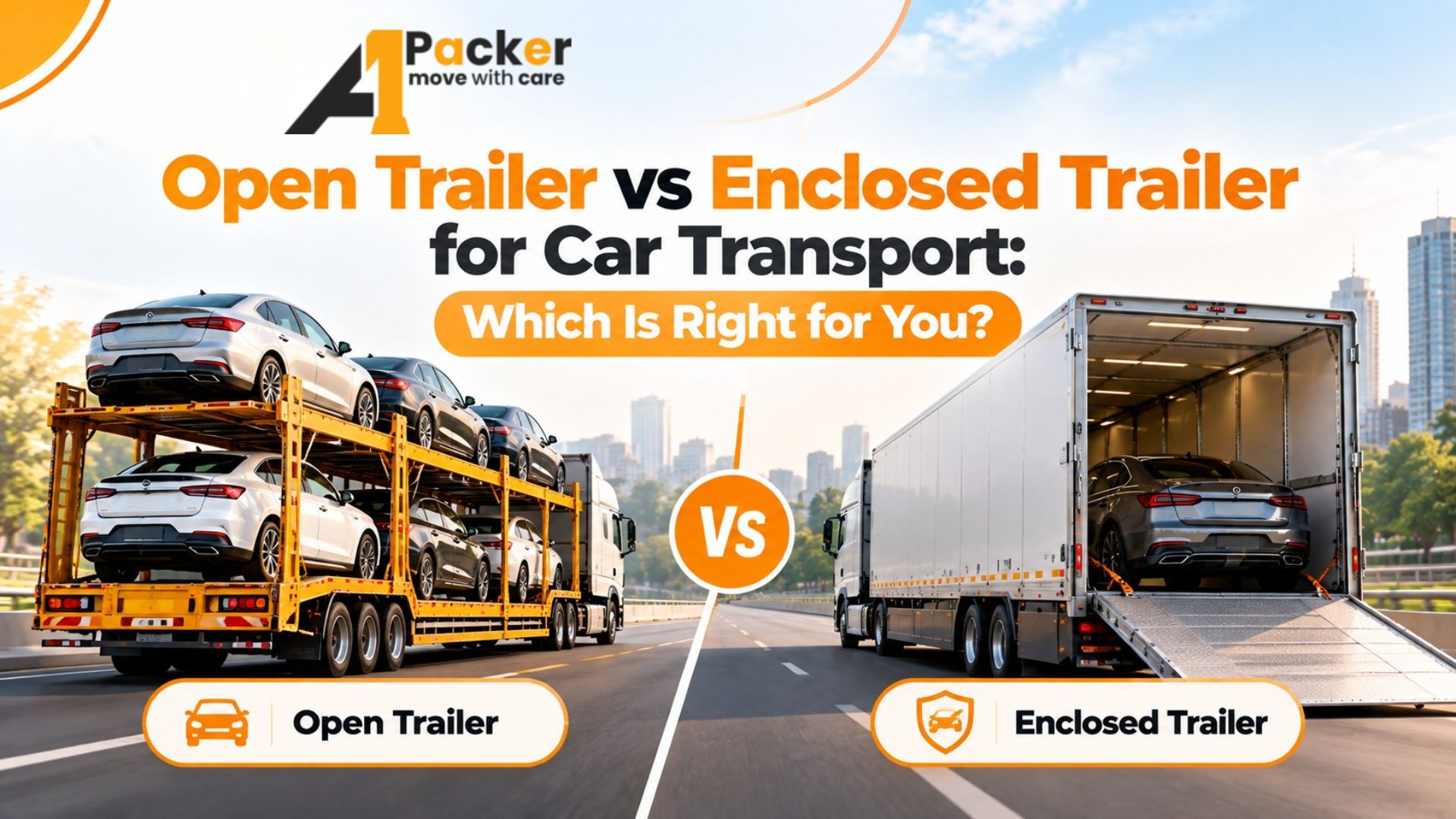
Two Ways to Ship a Car — and Why the Choice Matters
When you book a car transport service in India, the company will offer you two basic options: an open trailer or an enclosed trailer. Most first-time customers pick the cheaper option without fully understanding the difference. This guide breaks down exactly what each method involves so you can make the right choice for your vehicle, your budget, and the distance you are shipping.
What Is an Open Trailer?
An open trailer — sometimes called an open carrier or flatbed carrier — is a multi-level truck that carries vehicles in the open air. Your car is loaded onto the trailer alongside other vehicles, secured with straps, and transported without any weather protection.
Open carriers are the most common type of car transport in India. You have almost certainly seen them on highways carrying multiple cars from manufacturers to dealers. The same method is used for private car transport.
Advantages of Open Transport
- Lower cost — because multiple vehicles share the same truck, the cost per vehicle is lower. Open transport typically costs 30 to 50 percent less than enclosed transport for the same route.
- Higher availability — open carriers run on most routes and are easier to schedule, especially for short-notice moves.
- Faster pickup — more trucks, more frequency, less waiting time.
Limitations of Open Transport
- No weather protection — your car is exposed to rain, dust, road debris, and bird droppings during transit. This rarely causes serious damage to standard vehicles, but it does mean the car arrives dirty and may have minor surface marks.
- No protection from road debris — small stones kicked up by the truck in front can cause minor chips in the paint or windshield. This is rare but possible on long-distance routes.
What Is an Enclosed Trailer?
An enclosed trailer carries your vehicle inside a fully enclosed container. The car is shielded from rain, dust, road debris, and direct sunlight throughout the journey. Enclosed carriers typically carry fewer vehicles — sometimes just one or two — giving each car more space and more careful handling.
Advantages of Enclosed Transport
- Full weather and debris protection — ideal for long-distance routes through monsoon regions, dusty highways, or areas with heavy road construction.
- Better security — the vehicle is not visible to passing traffic, reducing the risk of theft or vandalism during overnight stops.
- Recommended for high-value vehicles — if your car costs more than thirty lakh rupees, the additional cost of enclosed transport is a small fraction of the vehicle's value.
- Required for vintage and modified vehicles — cars with custom paint jobs, lowered suspensions, or rare models need the added protection of enclosure.
Limitations of Enclosed Transport
- Higher cost — enclosed transport typically costs fifty to one hundred percent more than open transport for the same route.
- Less availability — fewer enclosed carriers operate on any given route, which may mean longer wait times for pickup.
Choosing Based on Your Situation
Your Car Is a Standard Daily Driver
If you are shipping a standard sedan, hatchback, or SUV that you use every day, open transport is the practical choice. The exposure to weather and road debris during a two to five day journey is minor, and a thorough wash on arrival takes care of any surface dirt. Save the extra money.
Your Car Is a Luxury or Performance Vehicle
Luxury sedans, sports cars, and SUVs costing above twenty lakh rupees are good candidates for enclosed transport. The cost difference is marginal relative to the vehicle's value, and you have peace of mind knowing the paint and exterior finish are protected throughout the journey.
You Are Shipping During Monsoon Season
If your shipment travels through heavy rainfall regions — coastal routes, the Northeast, or any route during June to September — enclosed transport significantly reduces the chance of water ingress or humidity damage, especially for older vehicles with imperfect rubber seals.
The Car Has a Custom or Show Finish
Wrapped vehicles, show cars, vintage models with original paint, or any car with a paint job that cannot be easily repaired should always travel enclosed. No amount of savings on transport justifies the risk to an irreplaceable finish.
Questions to Ask Your Transport Company
Before booking either type of transport, ask:
- Is transit insurance included, and does it cover both open and enclosed transport?
- How will the car be secured on the carrier — which type of straps and at how many points?
- Will the driver do a condition inspection before loading and provide a signed report?
- What is the estimated transit time for your route?
The Bottom Line
For most vehicles and most budgets, open transport is perfectly safe and significantly cheaper. Choose enclosed transport when the vehicle's value, condition, or finish justifies the premium — or when weather conditions on the route make protection a priority. Either way, always insist on a pre-loading condition report and transit insurance before the truck leaves your driveway.