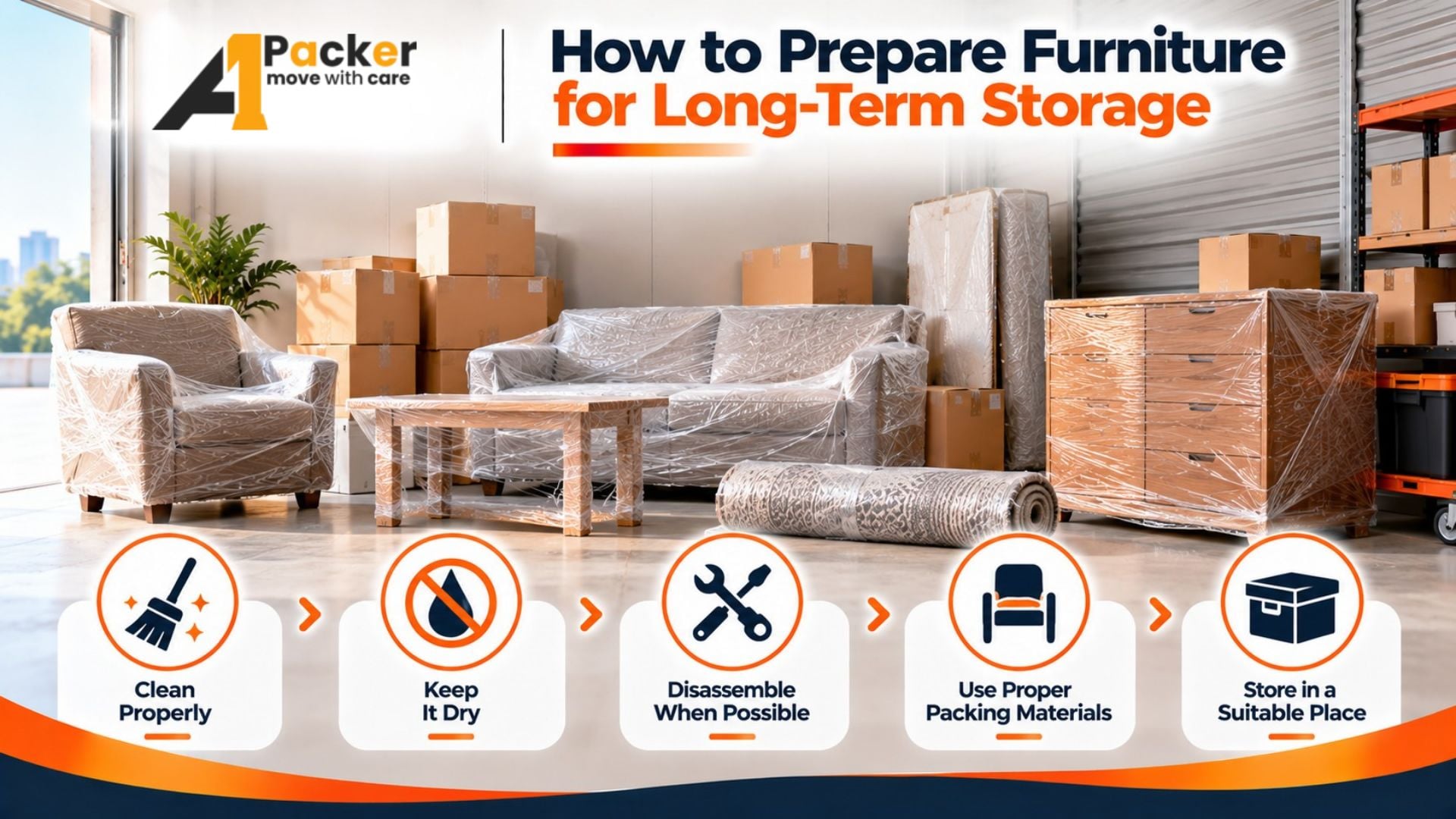
The Question Nobody Thinks to Ask Before Storage
Most people booking a storage unit focus on what they want to store and how much space they need. They rarely ask the equally important question: is there anything I should not put in storage?
The answer is yes — and the list is longer than most people expect. Some items are prohibited by storage facilities for safety reasons; others are excluded from insurance coverage; others simply degrade or become dangerous over time in a storage environment. Here is the complete guide.
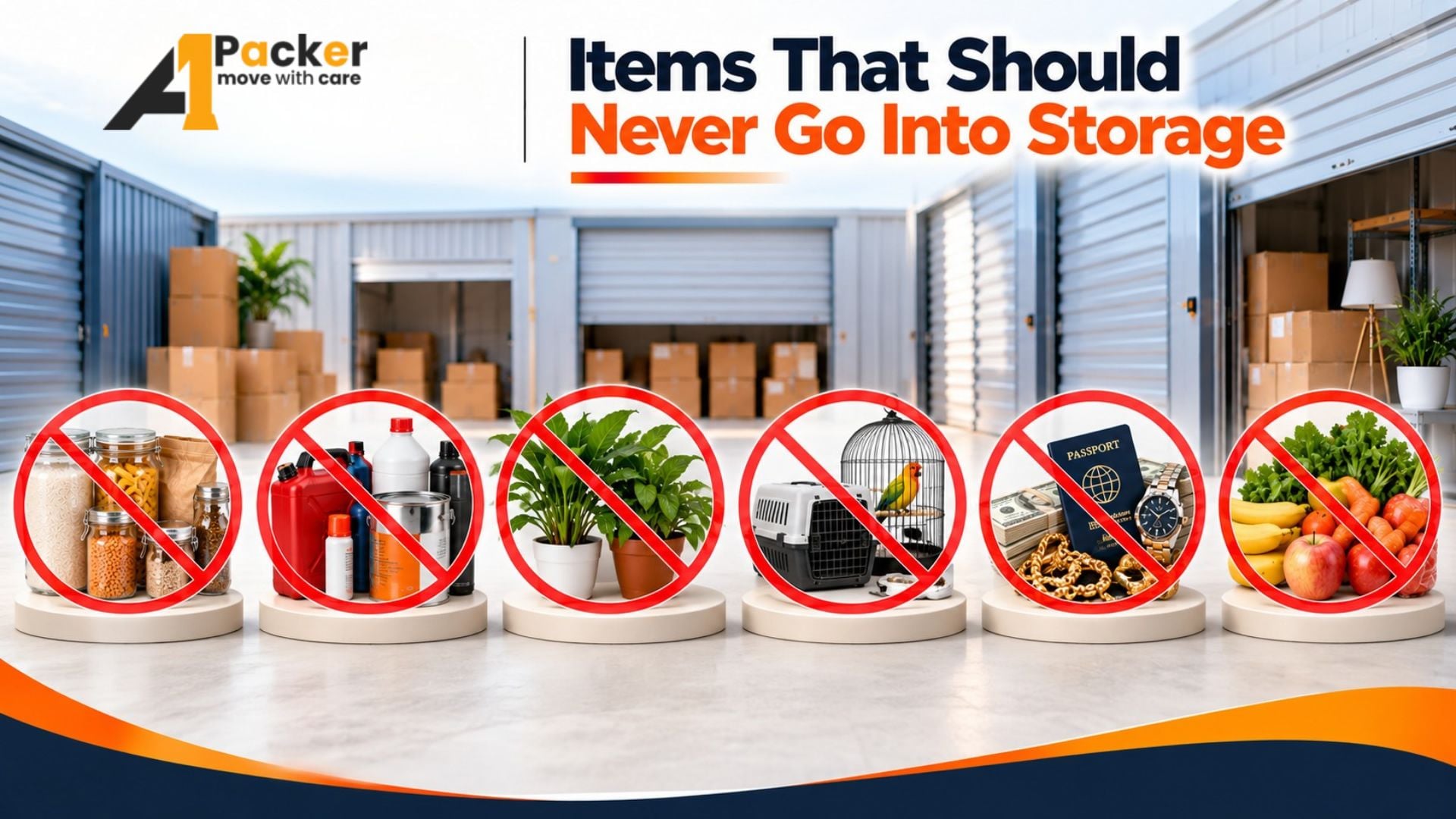
Perishable Food and Beverages
This seems obvious but is worth stating clearly: no food or drink items should go into long-term storage, with very limited exceptions. Perishable food — fresh produce, dairy, cooked food — obviously cannot be stored. But the prohibition extends further than most people realise:
- Tinned and jarred food — while shelf-stable at home, tins stored in temperature-extremes fluctuate environments over months can rust or develop seal failures. The contents attract pests.
- Dry goods in open or poorly sealed packaging — rice, flour, lentils, and similar items in original packaging attract rodents and insects even through thin paper or plastic packaging
- Condiments and sauces — these leak over time, particularly as storage temperatures rise and fall seasonally, and the resulting mess contaminates everything nearby
- Alcohol — many storage facilities prohibit alcohol entirely. Where permitted, bottles are at significant breakage risk over a long storage period
The rule: if it can be eaten, it should not be stored.
Flammable and Hazardous Materials
This is the category where violations cause the most serious consequences — including facility fires that destroy not just your goods but the goods of every other customer in the facility.
Items that are prohibited by virtually every reputable storage facility:
- Petrol, diesel, and other fuels — even in small quantities or sealed containers
- LPG cylinders or any pressurised gas canisters
- Paint, varnish, and solvent-based products
- Aerosol cans — the propellant is flammable and pressurised containers can rupture under heat
- Fertilisers and agricultural chemicals
- Pesticides and insecticides
- Cleaning chemicals in concentrated form
- Fireworks
These prohibitions are not bureaucratic rules — they exist because these items have caused actual fires in storage facilities, destroying everything inside. Most storage agreements include a clause that makes you liable for damage caused by prohibited items you have introduced to the facility.
Tyres and Rubber Items
Rubber tyres are prohibited at many storage facilities not because of fire risk (though rubber does burn) but because of pest attraction. Stagnant water collects inside stored tyres, creating a breeding ground for mosquitoes. Most facilities in India will not accept loose tyres for this reason.
Living Things
No plants, animals, or organisms of any kind. Plants die without light and water and attract pests. Any consideration of storing live animals is both prohibited and inhumane.
Irreplaceable Documents Without Digital Copies
This is not a prohibition — you can store documents — but it is a strong caution. If a document is irreplaceable and has no digital backup, storing it in a facility (however secure) introduces risk that a home safe or bank locker does not. Original property documents, original educational certificates, and original wills should ideally be stored in a bank locker or legal document storage facility specifically designed for high-value records, with a certified digital copy kept separately.
Documents placed in a general storage unit are at risk from moisture damage, pest damage, or — in the event of a facility incident — total loss. The risk is low in a well-run facility, but irreplaceable means exactly that.
High-Value Items Without Proper Insurance
Jewellery, artworks, antiques, and high-value collectibles can physically go into storage, but should not unless:
- The declared value in the storage agreement accurately reflects their worth
- The facility's insurance covers the full replacement value
- You have your own all-risks policy extending to items in storage
Most standard storage insurance has coverage limits per unit — often quite low — that would not come close to replacing a significant jewellery collection or a valuable painting in the event of theft or fire. Either insure these items appropriately or keep them in a dedicated safe deposit facility.
Firearms and Weapons
Legally licensed firearms must be stored according to specific requirements under Indian law, which typically mandate licensed armouries rather than general storage facilities. Storing firearms in a self-storage unit violates both the storage agreement and likely firearms licensing conditions.
Wet or Damp Items
This is one of the most common causes of avoidable storage damage. Any item placed into storage while still damp — a rug that was washed but not fully dried, a tent that was not dried after use, a mattress that absorbed humidity during transit — will develop mould in the enclosed storage environment regardless of the facility's climate control. The mould then spreads to adjacent items.
The rule: everything that goes into storage must be completely and thoroughly dry. For soft furnishings, give them at least 48 hours in dry conditions before packing for storage. Check mattresses, sofas, and upholstered items specifically — they retain moisture long after their surface appears dry.